Rabu, 20 Februari 2013

Deep in Kalimantan

Hello hello, long time no posting here.How are you? fine? Today we're gonna talk about wildlife in Kalimantan, western say it Borneo. As you know before, that Kalimantan is 3rd largest island in the world after Greenland and New Guinea. It lies on equator line,and of course it has tropical forest like other place that lies on it.
Kalimantan is wonderful place that still exist until now, It's rich island that has so many valuable wood and other natural resource.Teak tree thrives here,and so the other tree.This island was still covered by high dense forests in early 20th century.But now deforestation haunts this island, nevertheless this still has beautiful endemic plant such as 'Black Orchid' or 'Anggrek Hitam' and 'Mangga Kasturi' or 'Kasturi Mango', have you heard about them?. I don't know what to say more about plants, that'ts all what i've got, let's talk about animal.
Anggrek Hitam

Mangga Kasturi

The animal is no less beautiful, we know orang utan,bekantan, and the most expensive arowana, Super Red Arowana.Orang utan lives in tropical forest solitary , they usually live on tree but sometimes they come down to the ground for food.Although orang utan is omnivore, but 90% of their food are fruits,nectar,and leaves.
Now let orang utan enjoy their food in their tropical forest,and let us go to mangrove forest. There is unique monkey lives here,only in kalimantan. Yes, their name is Bekantan. Bekantan is kind of monkey that has long nose in theirselves.This is the difference between Bekantan and other monkeys, very unique isn't it?


Orang Utan

Super Red Arowana

Bekantan


Male Bekantan can grow over 75cm and its female can grow over 60cm.They live in group with number between ten to twenty monkeys.Those monkeys most spend their life on tree,sometimes they come into water, swim the river for going to another tree or jumping from tree.Even they're able to cross between island.Bekantan lives in group,but we hardly found them because they're shy animal.
Hey, when Bekantan swam in the river he saw big red arowana.That's great, we found most expensive Arowana. Yes they live here, this fish is very popular for fish keeper.
They have red beautiful colour in its scales with long beautiful body. "Super Red Arowana" or native calls it Siluk Merah is one of arowana breed. They live deep in Kalimantan jungle forest river. Same like any other arowana, these fishes are predator.They eat smaller fish ,insect, even smaller mammals.Long time ago before native knew how valuable it is they're eaten. After they know how expensive it is, they're hunted and then sold for high price.

Well that's all little information about Kalimantan wildlife, I'm sorry about my bad writing


Jumat, 06 Januari 2012

Top 5 Most Popular 2011 Event

"2011 has many moment in our life , Especially for shoking moments that came in tha year.Today I will summerize the event back. Let's Check this out ! "

Japan Tsunami
 On 11 March 2011 the world was shocked by Tsunami and Earthquake in Japan.That desaster devasted many buildings and vehicle including nuclear power plant. That incident killed about 2000 people.


Hosni Mubarak Overthrown
2011 was the year of overthrowing leader in Middle East. Many people demanded their leader to end their regime. Including Mubarak Overthrowing in Egypt. His people demanded him to end his regime.They stand for two months at Tahrir Squere if I'm not mistaken, and finally Mubarak resign from his post on 2011 February 11.


Overthrow Moammar Khadafi
Still in Middle East Especially in Libya. I think this was become the bloodiest overthrowing leader in Middle East. The people demanded their leader to end his regime, but he rejected their demanding. Because of his rejection ,the people become very angry and causing civil war in Libya. And finally Khadafi itself was captured and shot by his people during his capturing. He died in Sirte October 20,2011.


Osama Bin Laden Killed
On May 2011 ,Al-Qaeda Leader was killed at Pakistan when US soldier found his hideout


Royal Wedding
After we read bad news now is the to read good news. Last year Prince Harry and Kate Middleton were married. It became most festive wedding, their wedding was broadcasted on television.

Rabu, 12 Oktober 2011

Top 5 African Predator

"Africa,that name reminds me about amazing wildlife that still stand amazingly. The animal live free in their world peacefully.Including the predators,many of them become icon of Africa.Not only icon for Africa but also become icon of some intention.So,I will presente about 5 Most Popular African Predator,check it out ! :)"


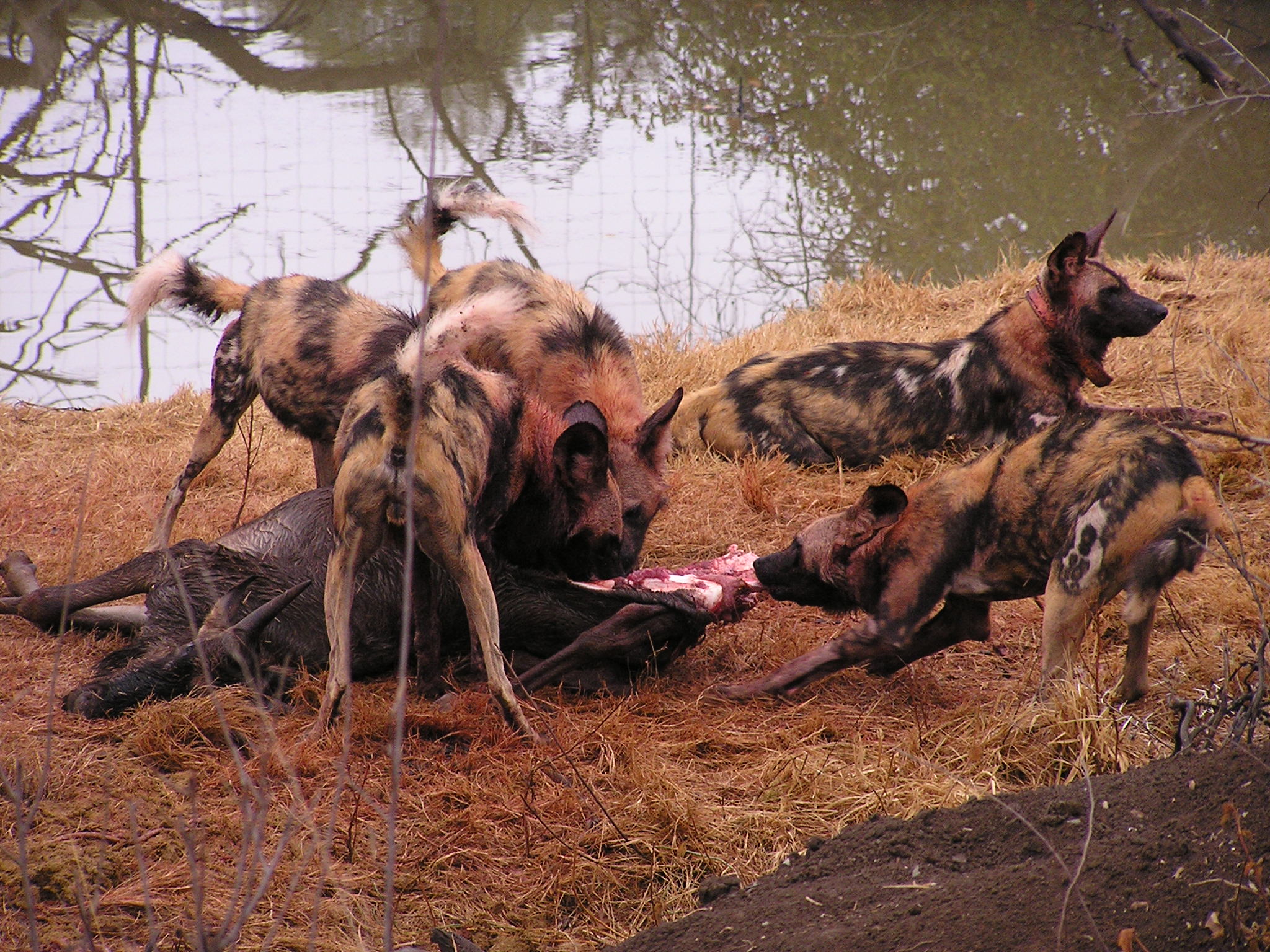
African wild dog( Lycaon pictus)


Lycaon pictus is a large canid found only in Africa, especially in savannas and other lightly wooded areas. It is variously called the African wild dog, African hunting dog, Cape hunting dog, painted dog, painted wolf, painted hunting dog, spotted dog, or ornate wolf.The African wild dog's main prey varies among populations but always centers around medium-to-large sized ungulates, such as the impala, Thomson's Gazelle, Springbok, kudu, reedbuck, and wildebeest calves.


Hyena

Hyenas or Hyaenas (from Greek "ὕαινα" - hyaina) are the animals of the family Hyaenidae (play /hɪˈɛnɨdɛ/) of suborder feliforms of the Carnivora. It is the fourth smallest biological family in the Carnivora (consisting of four species), and one of the smallest in the mammalia. Despite their low diversity, hyenas are unique and vital components to most African and some Asian ecosystems.The striped hyena is primarily a scavenger, though it will occasionally attack and kill any defenceless animal it can overcome, and will supplement its diet with fruits. The spotted hyena, though it also scavenges occasionally, is an active pack hunter of medium to large sized ungulates, which it catches by wearing them down in long chases and dismembering them in a canid-like manner. The aardwolf is primarily an insectivore, specialised for feeding on termites of the genus Trinervitermes and Hodotermes, which it consumes by licking them up with its long, broad tongue. An aardwolf can eat 300,000 Trinervitermes on a single outing.


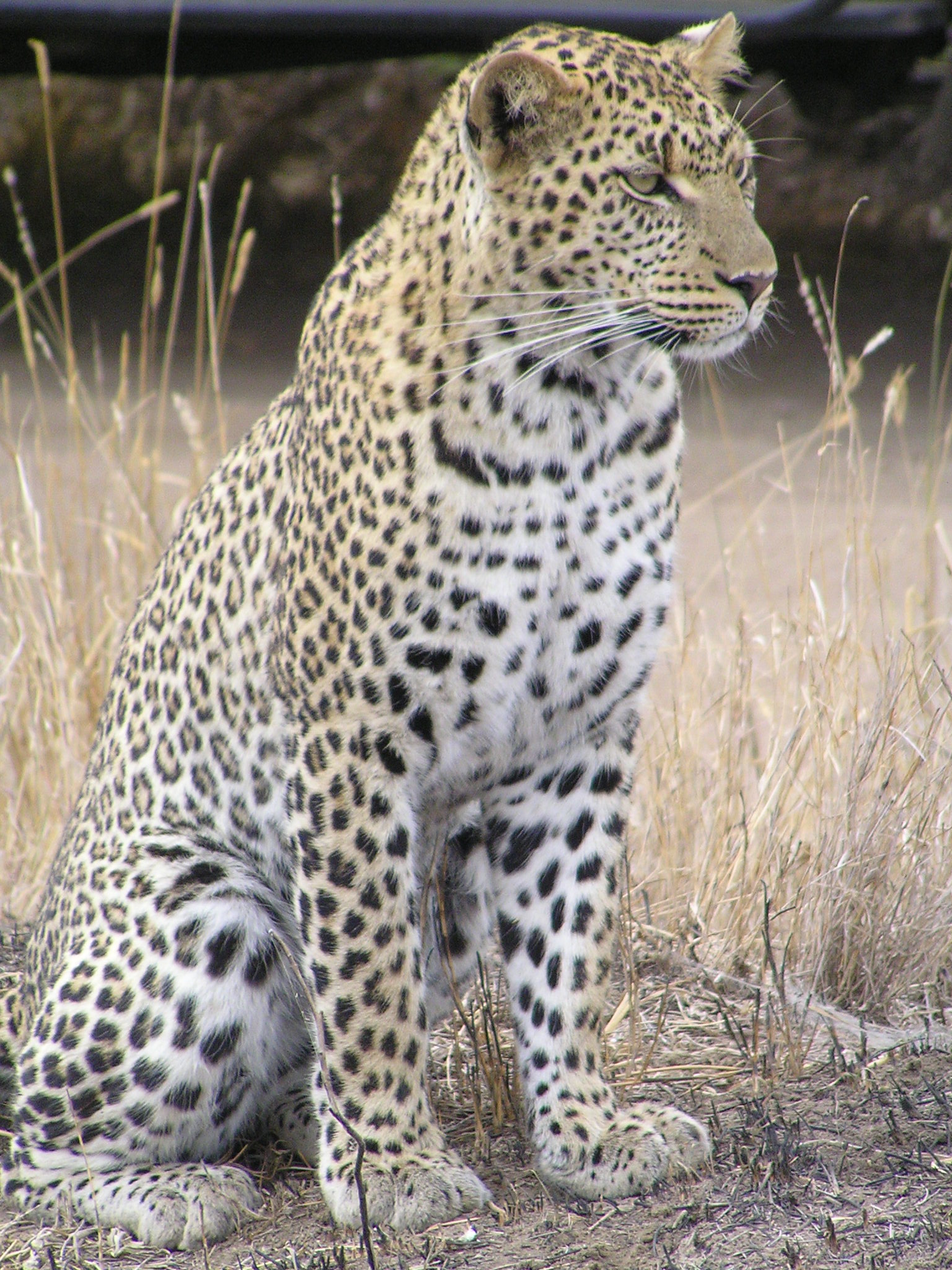
African Leopard

The African Leopard (Panthera pardus pardus) is a leopard subspecies occurring across most of sub-Saharan Africa. In 2008, the IUCN classified leopards as Near Threatened, stating that they may soon qualify for the Vulnerable status due to habitat loss and fragmentation. They are becoming increasingly rare outside protected areas. The trend of the population is decreasing.
African leopards exhibit great variation in coat color, depending on location and habitat. Coat color varies from pale yellow to deep gold or tawny, and is patterned with black rosettes while the head, lower limbs and belly are spotted with solid black. Male leopards are larger, averaging 60 kg (132 lb) with 91 kg (200 lb) being the maximum weight attained by a male. Females weigh about 35–40 kg (75–90 lb) on average.
Leopards inhabiting the mountains of the Cape Provinces appear physically different from leopards further north. Their average weight may be only half that of the more northerly leopard.
Between 1996 and 2000, 11 adult leopards were radio-collared on Namibian farmlands. Males weighed 37.5 to 52.3 kg only, and females 24.0 to 33.5 kg.


Cheetah

he cheetah (Acinonyx jubatus) is a large-sized feline (family Felidae) inhabiting most of Africa and parts of the Middle East. The cheetah is the only extant member of the genus Acinonyx, most notable for modifications in the species' paws. As such, it is the only felid with non-retractable claws and pads that, by their scope, disallow gripping (therefore cheetahs cannot climb vertical trees, although they are generally capable of reaching easily accessible branches). The cheetah, however, achieves by far the fastest land speed of any living animal—between 112 and 120 km/h (70 and 75 mph)in short bursts covering distances up to 500 m (1,600 ft), and has the ability to accelerate from 0 to over 100 km/h (62 mph) in three seconds.
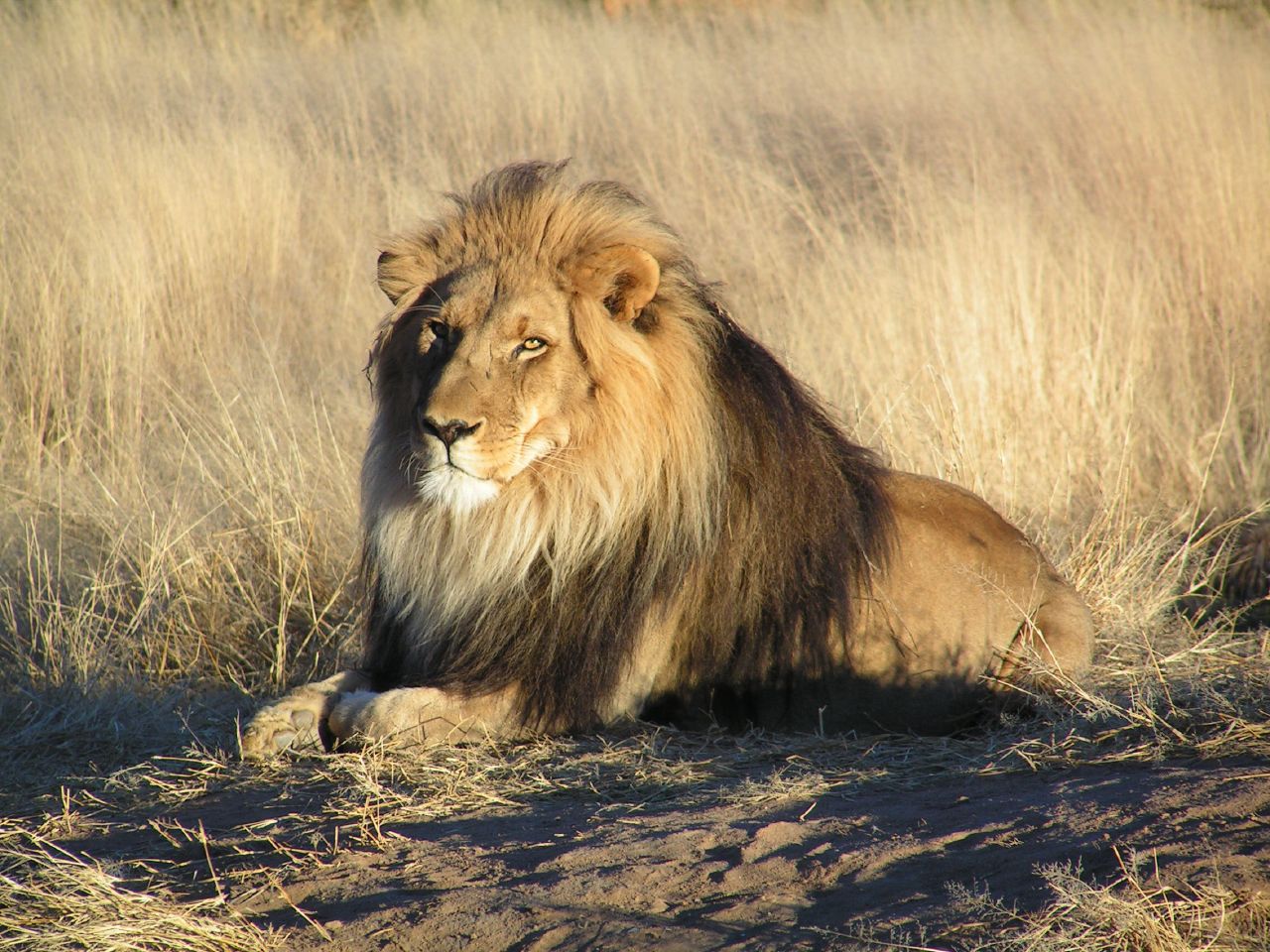
Lion

The lion (Panthera leo) is one of the four big cats in the genus Panthera, and a member of the family Felidae. With some males exceeding 250 kg (550 lb) in weight, it is the second-largest living cat after the tiger.
Lions live for ten to fourteen years in the wild, while in captivity they can live longer than twenty years. In the wild, males seldom live longer than ten years, as injuries sustained from continual fighting with rival males greatly reduce their longevity. They typically inhabit savanna and grassland, although they may take to bush and forest. Lions are unusually social compared to other cats. A pride of lions consists of related females and offspring and a small number of adult males. Groups of female lions typically hunt together, preying mostly on large ungulates. Lions are apex and keystone predators, although they scavenge as opportunity allows. While lions do not typically hunt humans, some have been known to do so.


source:wikipedia

Jumat, 30 September 2011

Top 5 Most Popular Indonesian Dance

"Indonesia has so many culture,one of them is dancing.Dancing has become something that can not be separated from Indonesia.Because so many advantage from it,we can strengten brotherhood,keeping our health,and the most important is dance is entertaining.Today I notify you about 5 most popular dance in Indonesia"


Saman Dance

Saman dance is dance from Gayo tribe who are in Aceh,usually displayed in important events including celebration of  Prophet Mohammed saw birthday.Saman dance is one of the media to the achievement of the message (da'wa). This dance reflects the educational, religious, polite, heroism, solidarity and togethernessLyric in this dance using Arabic and Gayo language. In some literature Saman dance was created and developed by Sheikh Saman,an ulama from Gayo in southeast Aceh.


Jaipongan


also known as Jaipong, is a popular traditional dance of Sundanese people, West Java, Indonesia. The dance was created by Gugum Gumbira, based on traditional Sundanese Ketuk Tilu music and Pencak Silat movements.Jaipongan includes revived indigenous arts, like gamelan, but it also did not ignore Western music completely despite the ban on rock and roll. It used its sensuality and the sensuality found in a traditional village music and dance, ketuk tilu. However, many believe it is something purely Indonesian or Sundanese in origin and style. It is developed predominately from rural folk forms and traditions as a purely indigenous form. The rise of cassettes and films has led to the popularity of the musical form of jaipongan. It has spread from its home in West Java’s Sunda, to greater Java and Indonesia


Pendet dance


Pendet is a traditional dance from Bali, Indonesia, in which offerings are made to purify the temple or theater as a prelude to ceremonies or other dances. Pendet is typically performed by young girls, carrying bowls of flower petals, handfuls of which are cast into the air at various times in the dance. Pendet can be thought of as a dance of greeting, to welcome the audience and invite spirits to enjoy a performance.


Tari Piring (Plate Dance)


Tari piring is dance art from west sumatra.This dance is played by using plate as a main media.Those plates are swinged fastly controlled .It has movement like farmer doing in rice field. It usually shown for traditional events.


Sajojo

It's kind of social dance from Papua.It popular in 90's,introduced by Black Brother. Sajojo is the story about beautiful lady from a village.A lady that loved by her family and men in her village. A lady that coveted by men to date.


source: wikipedia
          http://sulawesi.infogue.com
          kemlu.go.id
         youtube

Minggu, 11 September 2011

5 Most Popular Looney Tunes Character

"Do you remember these character below?"


Porky Pig
Porky Pig is an animated cartoon character in the Warner Bros. Looney Tunes and Merrie Melodies series of cartoons. He was the first character created by the studio to draw audiences based on his star power, and the animators (particularly Bob Clampett) created many critically acclaimed shorts using the fat little pig. Even after he was supplanted by later characters, Porky continued to be popular with moviegoers and, more importantly, the Warners directors, who recast him in numerous everyman and sidekick roles. He is known for his signature line at the end of each short, "Th-th-th-that's all folks!" The slogan had also been used by both Bosko and Buddy and even Beans at the end of every Looney Tunes cartoon. In contrast, the Merrie Melodies series used the slogan: So Long, Folks! until the late 1930s when it was replaced with the same one used on the Looney Tunes series. (When Bugs Bunny was the closing character, he would break the pattern by simply saying, in his Brooklynese accent, "And Dat's De End!")
Porky's most distinctive trait is a severe stutter, for which he sometimes compensates by replacing his words; for example, "What's going on?" might become "What's guh-guh-guh-guh—...what's happening?" In the ending of many Looney Tunes cartoons, Porky Pig bursts through a bass drum head, and his farewell line "That's all folks!" becomes "Th-Th-Th-Th-Th-... That's all, folks."[citation needed] Porky Pig would appear in 152 cartoons in the Golden Age of American animation.

Porky Pig as seen currently.
Porky Pig's favorite outfit (1943-present)
First appearance I Haven't Got a Hat (1935)
Created by Friz Freleng (original design)
Bob Clampett (final design)
Voiced by Joe Dougherty (1935–1937)
Mel Blanc (1937–1989)
Bob Bergen (1990–present)
Noel Blanc (Tiny Toon Adventures)
Jeff Bergman (Earth Day Special, Cartoon Network Bloopers)
Billy West (My Generation G...G...G... Gap, Daffy Contractor (2004))
Bob Bergen (The Looney Tunes Show (2011-present))


Tazmania Devil
 The Tasmanian Devil, often referred to as Taz, is an animated cartoon character featured in the Warner Bros. Looney Tunes series of cartoons. The character appeared in only five shorts before Warner Bros. Cartoons closed down in 1964, but marketing and television appearances later propelled the character to new popularity in the 1990s.
As the youngest of the Looney Tunes, the Tasmanian Devil, or 'Taz' as he has come to be known, is generally portrayed as a dim-witted teenager-type with a notoriously short temper and little patience. He will eat anything and everything, with an appetite that seems to know no bounds. He is best known for his speech consisting mostly of grunts, growls and rasps, and his ability to spin and bite through just about anything.
In 1991, Taz got his own show, Taz-Mania, which ran for three seasons, in which he was the protagonist.
 Taz-Looney Tunes.svg
First appearance Devil May Hare (1954)
Created by Robert McKimson
Voiced by Mel Blanc (1954-1989)
Noel Blanc (Tiny Toon Adventures 1 episode only)
Jim Cummings (1990-present)
Dee Bradley Baker (Space Jam)
Brendan Fraser (Looney Tunes: Back in Action)
Jeff Bergman (Tiny Toon Adventures)
Ian James Corlett (Baby Looney Tunes)
Maurice LaMarche ("Tiny Toon Adventures, 1 episode only)
Mike Smith (singing voice; The Looney Tunes Show)


Tweety
Tweety Pie (also known as simply Tweety) is a fictional Yellow Canary in the Warner Bros. Looney Tunes and Merrie Melodies series of animated cartoons. The name "Tweety" is a play on words, as it originally meant "sweetie", along with "tweet" being a typical English onomatopoeia for the sounds of birds. His characteristics are based on Red Skelton famous "Mean Widdle Kid". Tweety appeared in 48 cartoons in the Golden Age.
Despite the perceptions that people may hold, owing to the long lashes and high pitched voice of Tweety, Tweety is male.[citation needed] This was established several times in the series "Sylvester and Tweety Mysteries". It was also confirmed toward the end of "Snow Business" when Granny exclaimed to Tweety and Sylvester, "Here I am, boys!" On the other hand, his species is ambiguous; although originally and often portrayed as a young canary, he is also frequently called a rare and valuable "tweety bird" as a plot device, and once called "the only living specimen". Nevertheless, the title song directly states that the bird is a canary. His shape more closely suggests that of a baby bird, which in fact is what he was during his early appearances (although the "baby bird" aspect has been used in a few later cartoons as a plot device). The yellow feathers were added but otherwise he retained the baby-bird shape.
In his early appearances in Bob Clampett cartoons, Tweety is a very aggressive character who tries anything to foil his foe, even kicking his enemy when he is down. Tweety was tamed down when Friz Freleng started directing the series into a more cutesy bird, and it hastened even more when Granny was introduced, however sometimes Tweety still kept his malicious side.
Frameless
Tweety in the Friz Freleng design. This is also his current appearance.
First appearance A Tale of Two Kitties (November 21, 1942)
Created by Robert Clampett (original)
Friz Freleng (final redesign)
Voiced by Mel Blanc (1942-1989)
Jeff Bergman (1990-1993, 2011-current)
Bob Bergen (1990-present)
Joe Alaskey (The Sylvester and Tweety Mysteries (1995)-present)
Eric Goldberg (Looney Tunes: Back in Action)
Billy West (Museum Scream)
Samuel Vincent (Baby Looney Tunes)
Greg Burson (Animaniacs)


Daffy Duck
Daffy Duck is an animated cartoon character in the Warner Bros. Looney Tunes and Merrie Melodies series of cartoons, often running the gamut between being the best friend and sometimes arch-rival of Bugs Bunny. Daffy was the first of the new breed of "screwball" characters that emerged in the late 1930s to supplant traditional everyman characters, such as Mickey Mouse and Popeye, who were more popular earlier in the decade. Daffy starred in 133 shorts in the Golden Age, third amongst Looney Tunes/Merrie Melodies cartoons, behind Bugs Bunny's 166 appearances and Porky Pig's 159 appearances, although Daffy is far more famous and plays a much more important role in recent Looney Tunes activity than Porky does.
Virtually every Warner Bros. cartoon director put his own spin on the Daffy Duck character - he may be a lunatic vigilante in one short, but a greedy gloryhound in another. Bob Clampett and Chuck Jones both made extensive use of these two very different versions of the character.
Daffy was #14 on TV Guide's list of top 50 best cartoon characters,and was featured on one of the issue's four covers as Duck Dodgers with Porky Pig and the Powerpuff Girls (all of which are Time Warner-owned characters).
Duck Amuck.gif
Daffy in Duck Amuck (1953)
First appearance Porky's Duck Hunt (1937)
Created by Tex Avery
Bob Clampett
Voiced by Mel Blanc (1937-1989, 2011) (Daffy Rhapsody)
Jeff Bergman (1990-1993, 2011-current)
Greg Burson (1993-1995)
Joe Alaskey (Bugs Bunny's Lunar Tunes) (1991, 1995–current)
Dee Bradley Baker (Space Jam, 1996)
Jeff Bennett (Attack of the Drones)
Bugs Bunny
Bugs Bunny is a fictional animated character who starred in the Looney Tunes and Merrie Melodies series of animated films produced by Leon Schlesinger Productions, which became Warner Bros. Cartoons in 1944. Bugs starred in 167 shorts during the Golden Age of American animation, and cameoed in many others, including few appearances in non-animated films. He is an anthropomorphic hare or rabbit.
According to Bugs Bunny: 50 Years and Only One Grey Hare, he was born on July 27, 1940 in Brooklyn, New York in a warren under Ebbets Field, home of the Brooklyn Dodgers. In reality, he was created by many animators and staff, including Tex Avery, who directed A Wild Hare, Bugs' debut role, and Robert McKimson, who created the definitive "Bugs Bunny" character design. According to Mel Blanc, the character's original voice actor, Bugs has a Flatbush accent. Bugs has had numerous catchphrases, the most prominent being a casual "Eh... What's up, doc?", usually said while chewing a carrot.
He is the most prominent of the Looney Tunes characters as his calm, flippant insouciance endeared him to American audiences during and after World War II. He is also a mascot of the Looney Tunes, as well as Warner Bros. in general.
Classic bugsbunny.png
Classic Bugs Bunny
First appearance Prototype: April 30, 1938
Porky's Hare Hunt
Official: July 27, 1940
A Wild Hare
Created by Ben Hardaway, (Prototype)
Tex Avery and Chuck Jones (Official)
Bob Clampett, (Final)
Voiced by Mel Blanc, (1938–1989)
Jeff Bergman (1990–1993; 2011–)
(see below)
 source:wikipedia